Cloud and cybersecurity

Business cloud and cybersecurity for companies

Business systems have to keep running. Even when something goes wrong.

We design, modernise and manage cloud infrastructure, servers and business systems with a focus on security, reliability and business continuity. From cloud migration to application protection, we connect software, devices and infrastructure through backup, disaster recovery, monitoring, cybersecurity and IoT connectivity.

IT engineer in a company server room checking racks, switches and cabling on a laptop

Your company depends on its systems. How well protected are they?

Outdated servers, untested backups, disconnected applications and devices that are hard to monitor can disrupt day-to-day work.

A hardware failure, a human error or a cyberattack can stop services, make data unavailable and slow down entire departments.

We analyse your current infrastructure and design solutions to improve the security, availability and integration of critical systems.

Cloud, security and continuity. Infrastructure designed for your business.

Cloud infrastructure and migration

We design and manage infrastructure on public, private and hybrid cloud. We support the migration of servers, databases and applications, defining scalable architectures and configurations that fit the company’s operating requirements.

Cybersecurity and system protection

We put security measures in place to protect servers, networks, applications and company data. From firewall configuration to identity, access and vulnerability management, we work to reduce cyber risk.

Backup and disaster recovery

We design backup, retention and data recovery strategies, with protected copies, recovery procedures and regular tests. We define disaster recovery plans to limit the impact of failures, security incidents and system outages.

Infrastructure monitoring and management

We set up tools to monitor servers, applications, databases and cloud services. We track availability, performance, resources and anomalies through alerting and operating procedures.

IoT, hardware and industrial system integration

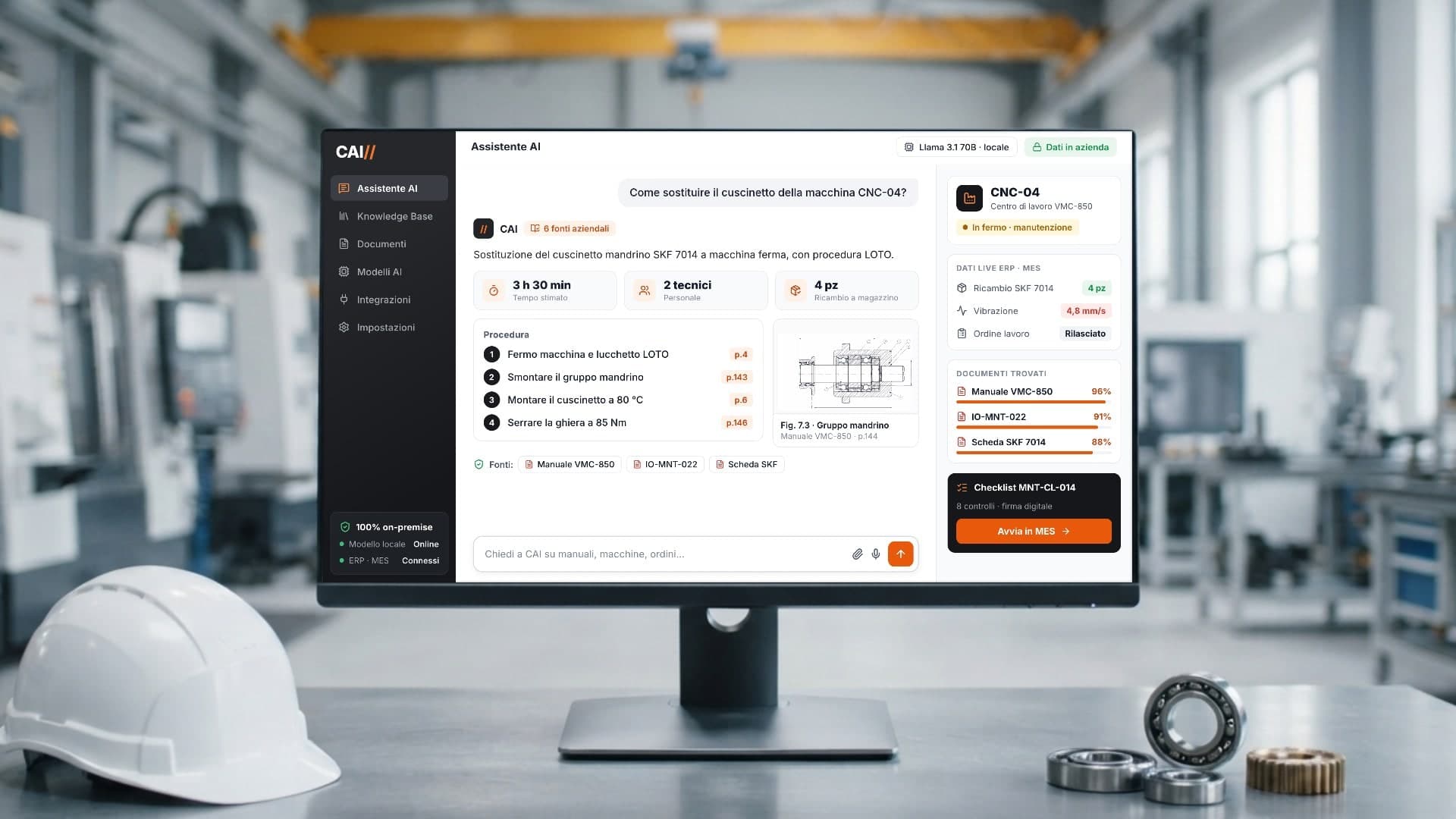
We connect sensors, IoT devices, smart terminals and machines to business software and infrastructure. We build integrations with industrial and business systems through gateways, communication protocols and APIs, enabling data collection, remote monitoring and process automation.

Not everything has to be in the cloud. Not everything has to stay on site.

Every company has different needs in terms of security, performance, cost and data control.

We assess the most suitable architecture without imposing a technology or an infrastructure model.

  • Public cloud

    Resources and services on public cloud platforms, with the option to scale capacity and performance.

  • Private cloud

    Dedicated environments with control over resource configuration, access policies and information management.

  • Hybrid cloud

    Infrastructure that combines on-site systems and cloud services, keeping applications and data in the most suitable environment.

  • On-premise and edge computing

    Servers and systems installed at the company or close to operating devices, to process data locally, connect machines and depend less on external connectivity.

Security is not a single product.

Protecting an infrastructure takes controls spread across access, networks, applications, devices and data.

  • Identity and access

    Multi-factor authentication, user management, roles, permissions and protection of administrative access.

  • Networks and applications

    Firewalls, segmentation, secure remote access and protection of internet-facing applications.

  • Servers and databases

    Secure configuration, updates, vulnerability management and information protection.

  • Backup and recovery

    Protected copies, retention policies, recovery tests and emergency procedures.

  • Monitoring and alerts

    Log collection, anomaly detection and service availability checks.

  • IoT devices and industrial networks

    Secure communications, IT and OT network segregation, access control and monitoring of connected devices.

A backup is not enough. You need to know how to restart.

Having a copy of your data does not necessarily mean you can quickly restore the whole operation.

A disaster recovery plan covers applications, databases, configurations, dependencies and recovery priorities.

We define the procedures based on operating needs and two indicators:

RPORecovery Point Objective
The maximum amount of data, expressed as a time interval, that the company can accept losing after an incident.
RTORecovery Time Objective
The maximum downtime considered acceptable before a service is restored.

From applications to machines. Systems that talk to each other.

Business infrastructure increasingly includes physical devices, sensors, terminals and industrial systems.

We design hardware and software integrations to collect operating data, monitor devices and make the data available in business software and platforms.

IoT and sensors
Collecting environmental, operating and performance data through connected devices.
Machines and industrial systems
Integration with PLC, SCADA and production systems through the interfaces and protocols the devices support.
Terminals and smart devices
Connecting RFID and NFC readers, time and attendance terminals, mobile devices and dedicated hardware.
Edge and data collection
Using gateways and local systems to collect, process and send data to business platforms.
Maintenance technician connecting an IoT gateway in a machine’s control cabinet, holding a tablet

Data security and technical support for compliance.

Protecting company information requires adequate technical measures, access controls and the ability to detect and handle incidents.

We help companies put in place the technology measures that contribute to personal data protection and cyber risk management, taking into account the applicable GDPR and NIS2 requirements.

We work on infrastructure, encryption, access management, logging, backup, service continuity and technical documentation, working with the company’s privacy, security and compliance leads when needed.

Infrastructure that fits every company’s needs.

  • Automated production line in a factory

    Industry and manufacturing

    Integration of machines and production systems, operating data collection, industrial network protection and business application continuity.

  • Distribution warehouse aisle with tall shelving

    Wholesale and distribution

    Infrastructure for ERP, warehouse and logistics, integration of terminals and devices, secure data access from multiple sites.

  • Clothes hanging in a shop

    Retail and e-commerce

    Application and database hosting, online platform protection, connected device integration and performance monitoring.

  • Professional working on business software on a laptop

    Service companies and professional firms

    Document protection, secure access to information, shared infrastructure, backup and management of the systems your team uses.

Grants and incentives

Your digital investment may qualify for incentives.

  • SME digitalisation grants
  • I4.0 digital vouchers
  • Industry 4.0
  • Transition 5.0
  • EU ERDF funds

We assess with you the opportunities available for your project: national and regional digitalisation grants and Italy’s enhanced depreciation (iperammortamento) for eligible investments made from 1 January 2026 to 30 September 2028.

From assessment to infrastructure management.

  1. 01

    Assessment and consulting

    We analyse existing systems, weak points, security needs, hardware integrations and modernisation opportunities.

  2. 02

    Design

    We define architecture, configuration, connectivity, protection measures and continuity strategies.

  3. 03

    Implementation and integration

    We configure environments, migrate applications and data, and connect compatible software, devices and systems.

  4. 04

    Monitoring and evolution

    We check that everything works, set up monitoring procedures and support updates and improvements to the infrastructure.

Frequently asked questions

Is it worth moving company servers to the cloud?

It depends on the applications, costs, technical requirements and operating needs. An assessment compares cloud, on-premise and hybrid options.

What is the difference between backup and disaster recovery?

A backup creates copies of data so it can be recovered. Disaster recovery covers the strategies and procedures to restore applications, systems and services after an incident.

Can industrial machines and IoT devices be connected to business software?

Yes, when the devices and systems offer compatible interfaces. Through gateways, APIs and protocols such as OPC UA, Modbus or MQTT we can design integrations that collect operating data and make it available in ERP, MES and company dashboards.

Can machines and sensors be monitored remotely?

Yes. With connected devices, gateways and monitoring platforms you can collect performance information and view statuses, events and anomalies, with appropriate security for communications.

Does NIS2 apply to every SME?

No. Whether it applies depends on the sector, the size and the other criteria set by the law. digitalH supports the technical implementation of the relevant security measures.

Can data stay on the company’s own servers?

Yes. We also design on-premise, private and hybrid architectures, weighing security requirements, available resources and operating needs.

How much does it cost to modernise IT infrastructure?

It depends on the number of servers and applications, data volumes, integrations, devices involved and security and availability requirements. A preliminary analysis sets priorities and estimates the investment.

Is your infrastructure ready to support your company?

From server modernisation to data protection, from machine integration to system monitoring, we design technology solutions that fit how your company operates.