Manufacturing, enterprises and service sectors
CAI
A private AI system for knowledge management and business automation within organizations.
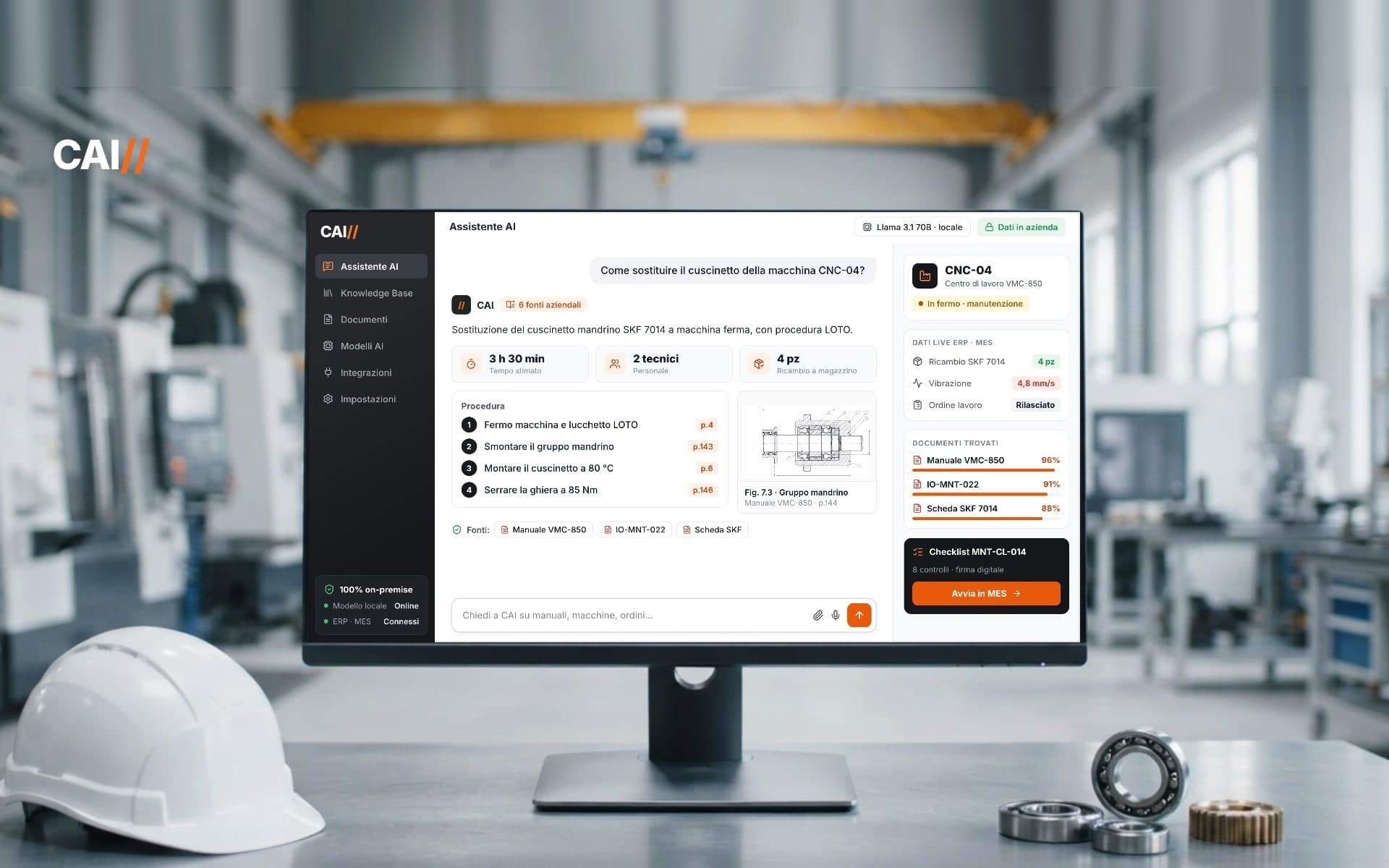
An integrated platform that connects the organization’s data, documents and operational systems to AI, making information easier to reach, automating processes and supporting decision-making. From searching maintenance manuals and internal procedures to analyzing data, tracking performance and sending smart alerts, CAI is designed to work within the organization’s technical infrastructure, with control over data, permissions and the AI models used.
- Industry
- Manufacturing, enterprises and service sectors
- Services
- Artificial intelligence
- Business automation
- Systems integration and cybersecurity
- Platforms
- Web app
- Admin panel
- Runs on the organization’s servers or in a private cloud
The problem to solve
Organizations hold large amounts of data, documents and knowledge built up over years, but these are often scattered across different departments and disconnected systems. This slows procedures down and makes it hard to access information and make decisions at the right time.
Do you face these problems in your organization too?
Employees and technicians spend a long time searching for information in documents and operating and maintenance manuals.
Teams depend on the expertise of a small number of employees, which delays tasks and makes knowledge transfer difficult.
Manual procedures keep being repeated even though the data needed to carry them out automatically is available.
It is hard to rely on AI answers without knowing their sources and checking that they are correct.
Old and scanned documents contain information that is hard to search and use.
Using public AI tools puts the privacy of data and sensitive documents at risk.
The organization needs to control access to information by department and job responsibilities.
It is hard to monitor AI usage, its costs and the operations carried out through it.
Who is CAI designed for?
Industries
Manufacturing and factories
Supporting production and maintenance teams, and making operating manuals, technical procedures and accumulated knowledge easier to access.
Banks and insurance companies
Access to contracts, policies and internal regulations, with control over data confidentiality and usage permissions.
Energy and utilities
Managing technical knowledge about equipment, facilities, networks and operating procedures.
Government bodies
Easier access to regulations, decisions, documents and internal procedures within a private technical environment.
Healthcare and pharmaceuticals
Access to protocols, procedures and quality documents according to user permissions.
Consulting firms and professional offices
Making use of the archive of contracts, projects, studies and professional documents.
Organization size
Small businesses
Start with one department or a defined set of processes and documents, without major investment in infrastructure.
Mid-sized companies
Connecting corporate knowledge across departments, with central management of users, permissions and AI models.
Large enterprises
An integrated architecture that supports multiple departments and companies, with management of AI costs, usage policies and audit logs.
How does the system work?
Reliable answers from the organization’s sources
When an employee needs information, CAI searches the documents available to them and gives an answer linked to the original source, with the option to go straight to the page where the information appears and check it.

Smart search across corporate knowledge
Whether the question is about an administrative procedure or a fault code on one of the factory’s machines, the system combines understanding what the question means with precise search for technical terms and codes to find the information needed.
Reference indicators from published cases of similar solutions.
-30%
Faster access to information
AI model management
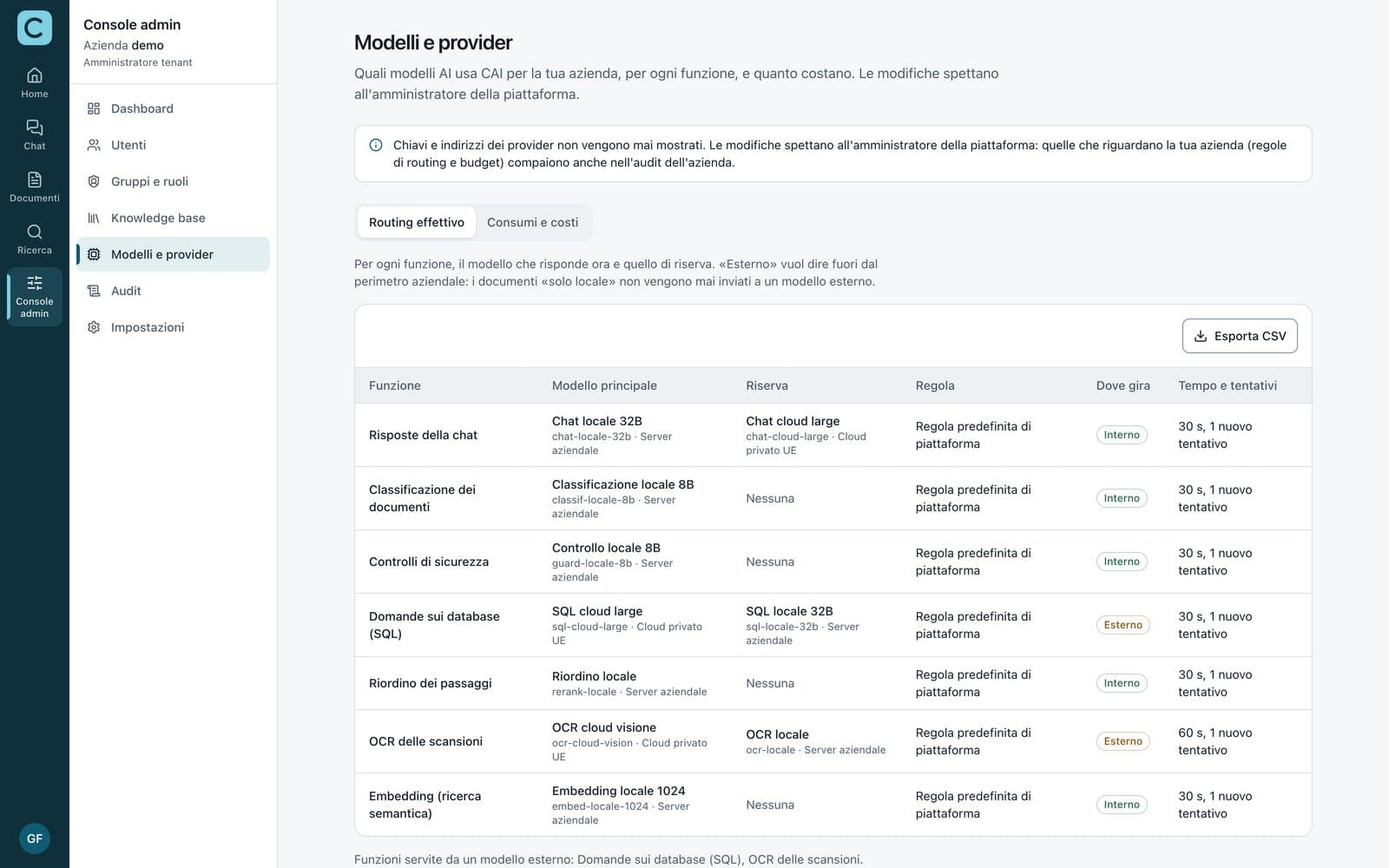
The organization’s needs vary from task to task. CAI lets you choose the right model for each operation, whether processing documents, analyzing images or answering questions, with the option to run models locally or use external services according to the organization’s policies.
Turning documents into usable knowledge
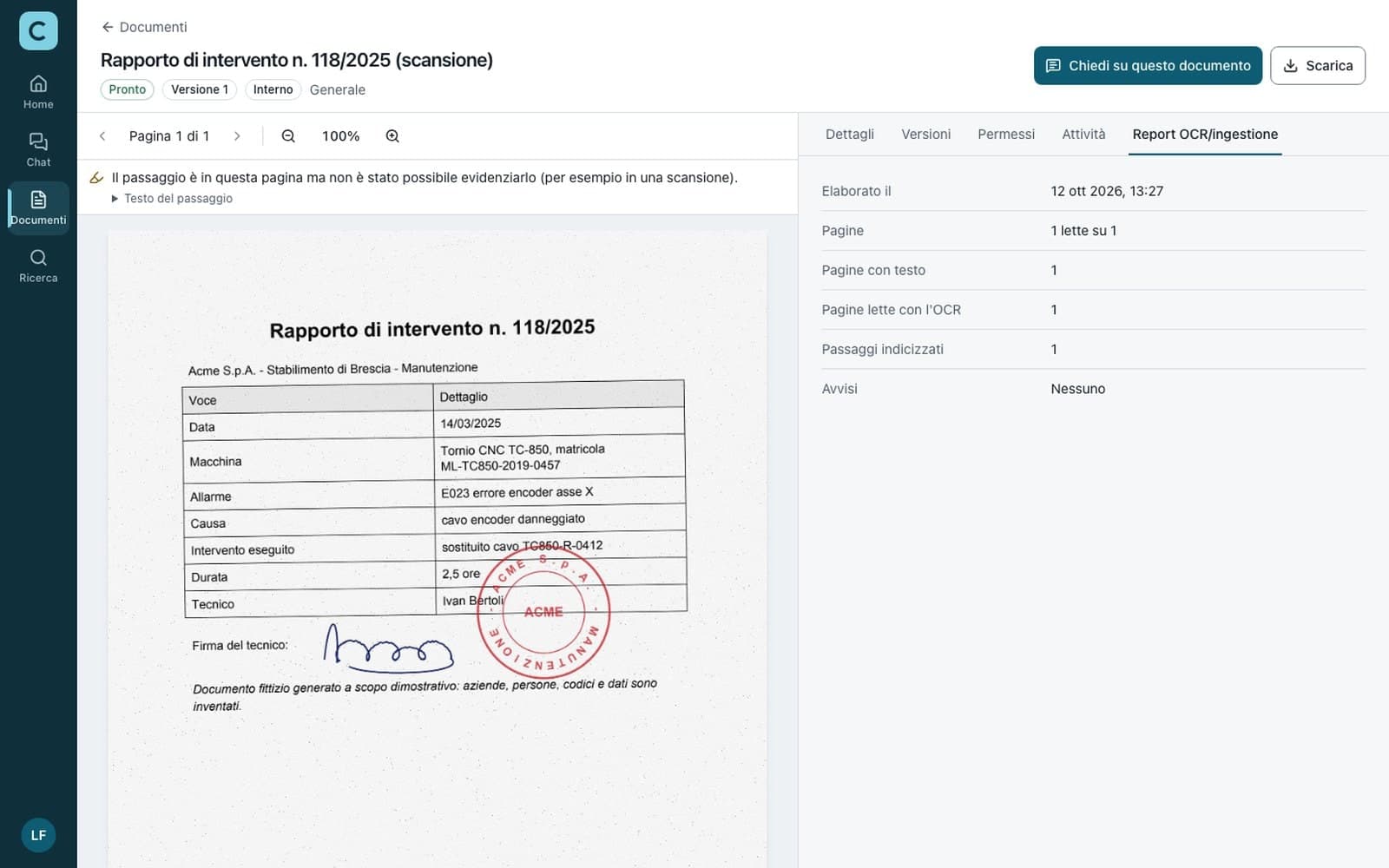
The system reads scanned paper documents, PDF files and spreadsheets, and turns their content into information that can be searched and used through AI.
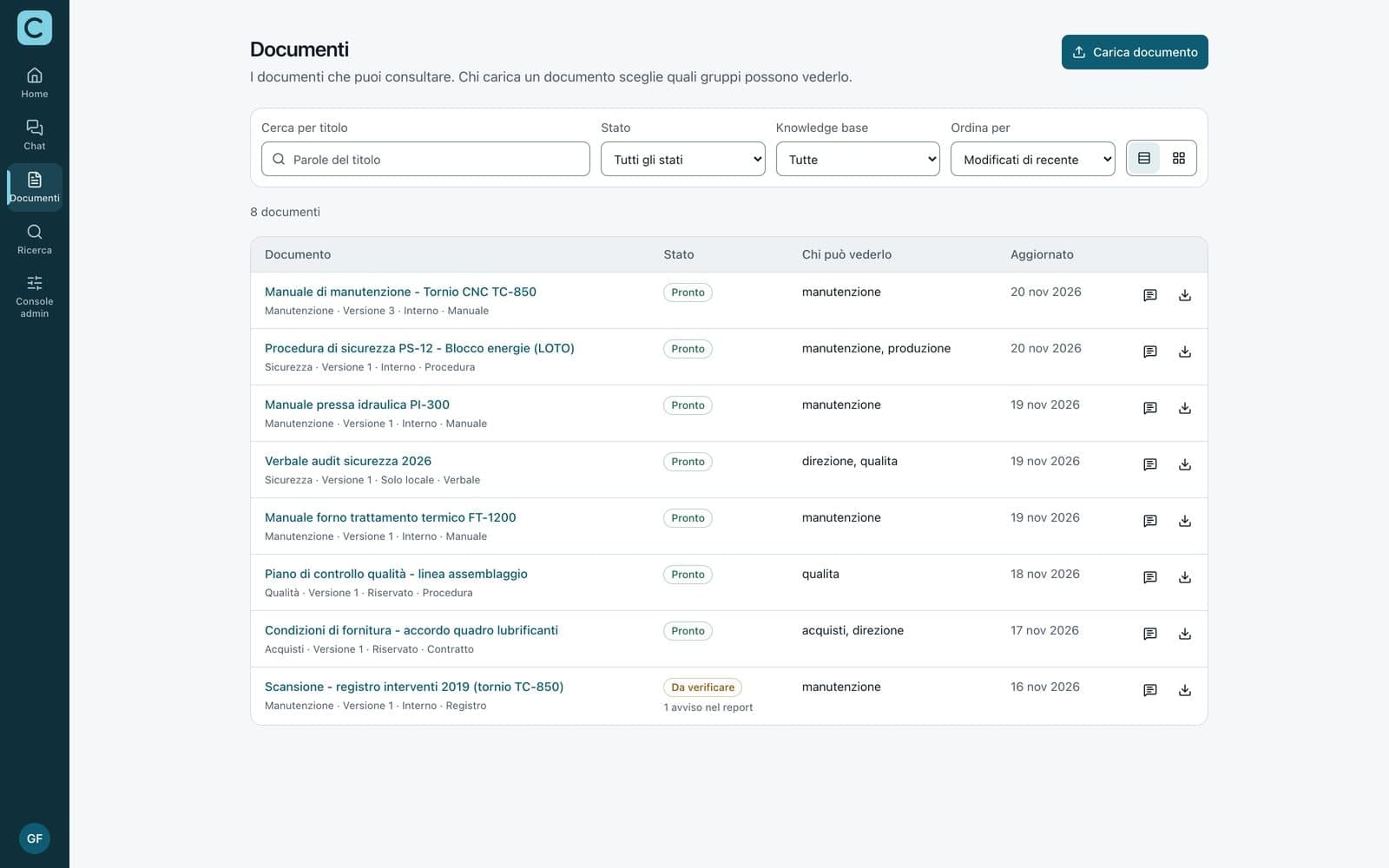
Knowledge and permission management
Documents and information are organized by department and confidentiality level, so each employee reaches the knowledge they need for their work without going beyond their permissions.
Integration with company accounts
Employees sign in to the platform with their work accounts, while administrators set permissions according to roles and responsibilities within the organization.
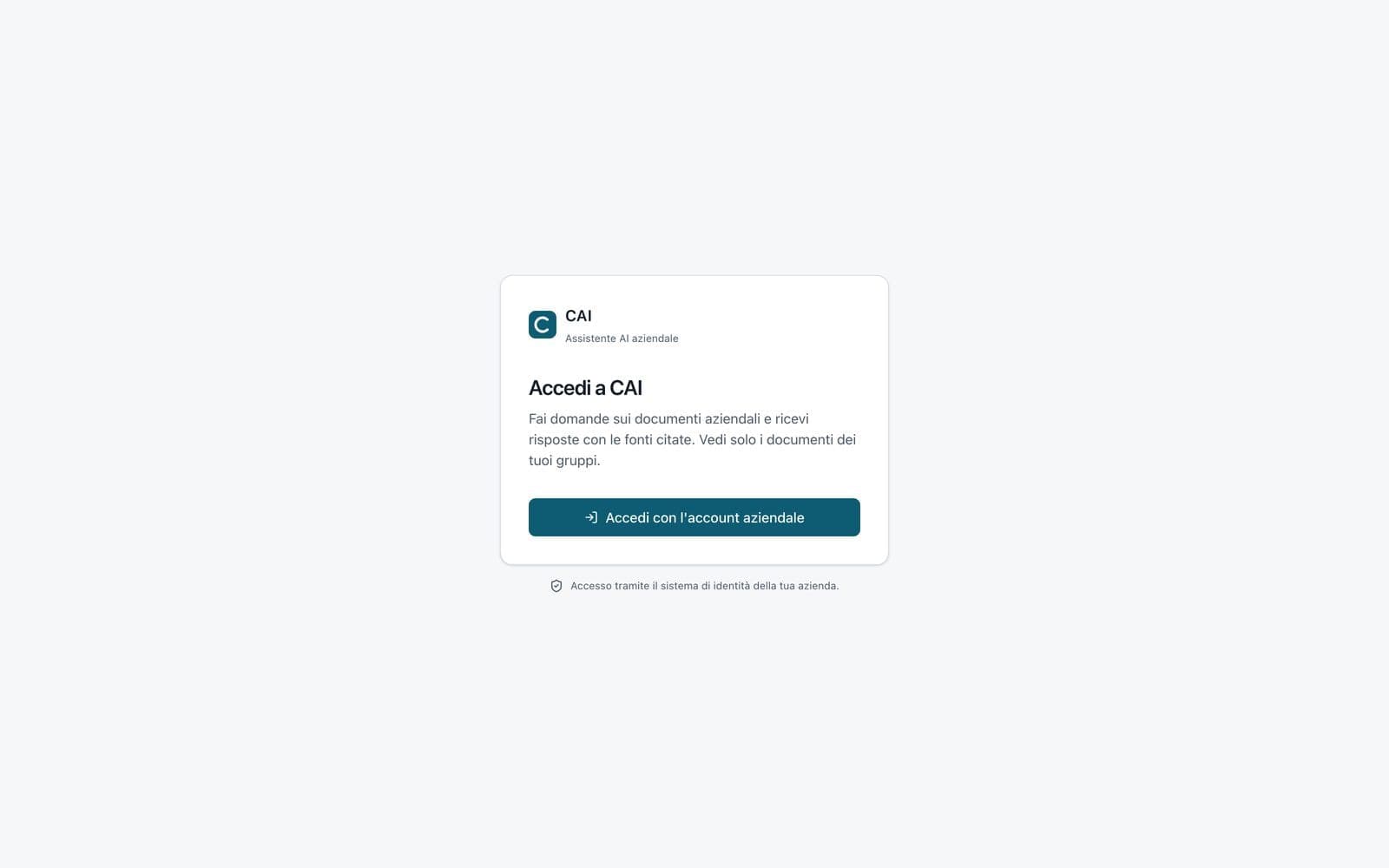
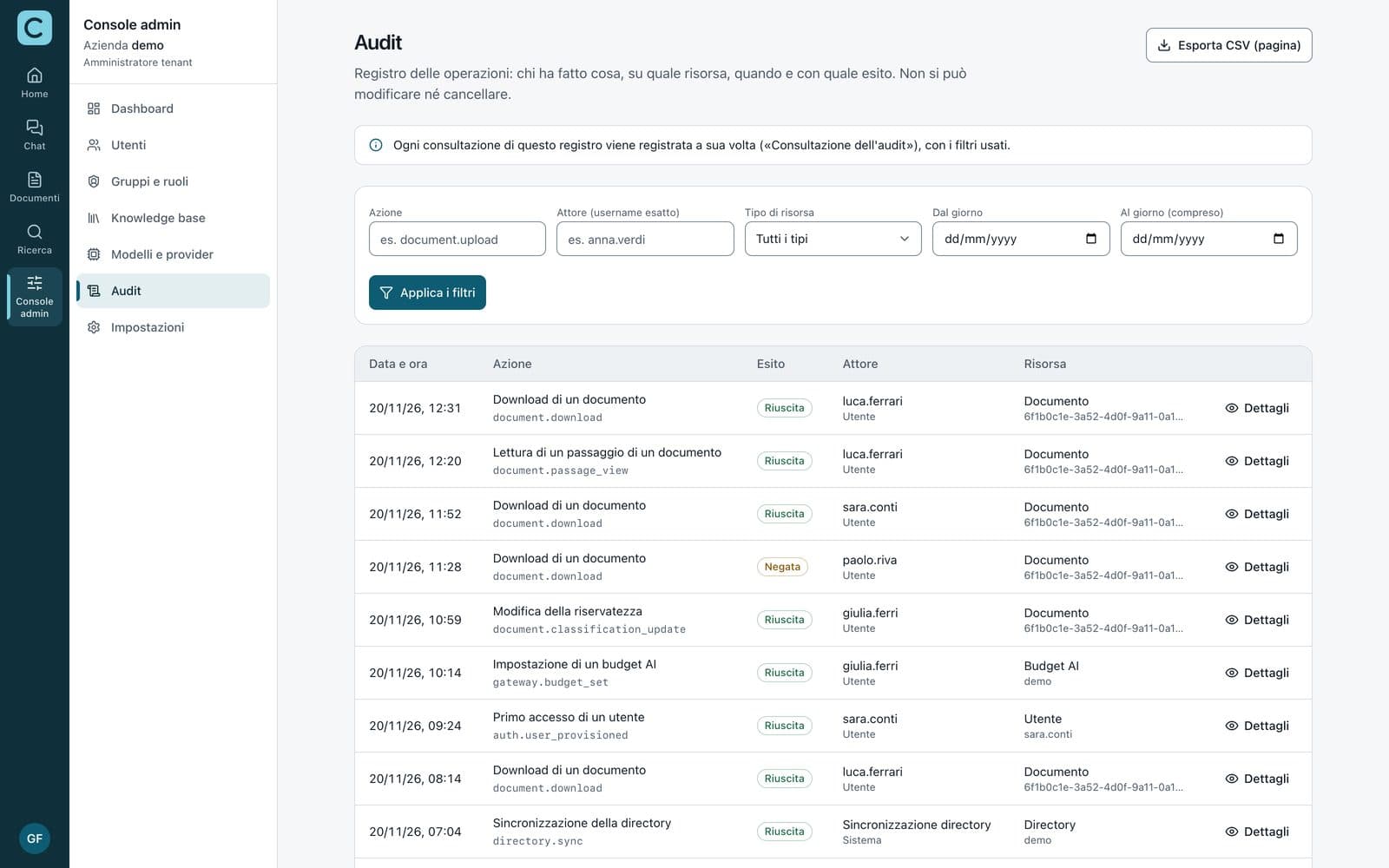
Usage and cost control
Administrators track AI model usage and the cost of each operation, set budgets and usage limits, and log activity for review and audit purposes.
Reference indicators from published cases of similar solutions.
-50%
Greater efficiency in operations and maintenance
Does your organization need an integrated AI system?
How did we build the solution?
Understanding the organization’s processes and knowledge
We started from how the different departments work, the information they rely on, and the tasks that AI could speed up or automate.
Building a unified AI environment
We designed the platform to bring knowledge sources, AI models and user management into a single environment that can scale and integrate with the organization’s systems.
Data control from the start
We took into account data privacy, access permissions and the option of running models within the organization’s infrastructure, according to its needs and security policies.
Testing quality and reliability
Answer accuracy, speed of access to information, correctness of sources and respect for user permissions are tested before the platform is adopted in the work environment.
Business impact
Reference indicators from published cases of similar solutions.
-30%
Faster access to information
73%
Less reliance on individual expertise
11 days
Faster training of new employees
-50%
Greater efficiency in operations and maintenance
Expansion options
Integration with corporate systems and archives
Connecting the platform to document management systems, SharePoint and shared folders, while keeping the original access permissions.
AI agents connected to ERP and MES systems
Connecting AI to administrative, production, inventory and sales data to support analysis and decision-making.
Process automation and smart alerts
Developing agents that track performance indicators, spot problems and opportunities, send alerts to those responsible, and carry out permitted actions within defined permissions.
Data protection and AI governance
Monitoring requests and answers to detect sensitive data and usage policy violations, and logging activity for audit purposes.
Document lifecycle management
Organizing document versions, updates, and review and approval workflows within the organization.
Frequently asked questions
How is CAI different from public AI tools?
CAI is designed to work with the organization’s data and internal knowledge, with the option of running AI models on its own servers, and with control over permissions, costs and information sources.
Can CAI run inside the organization without sending data to an external provider?
Yes. The platform and the models can run locally, and documents classified for local processing are processed without being sent to external AI providers.
Does CAI support data protection and compliance requirements?
The platform offers features that support data protection requirements, such as local deployment, permission management, audit logs and encryption. Regulatory compliance depends on how the system is implemented and on the organization’s policies.
What types of documents does CAI read?
PDF, Word, PowerPoint and Excel files and web pages, with a confidentiality level and the groups allowed to view each document. Scanned documents are read with OCR that runs inside the organization, keeping tables row by row.
How can AI move your organization’s business forward?
We study your organization’s systems, data and processes with you, and identify where AI can help automate work, improve performance and support decisions, within a technical environment that fits your needs.
Next project

Eazy