
E-commerce, retail and wholesale
Flatprice
A platform for analyzing the market and competitors and supporting pricing strategies with data.
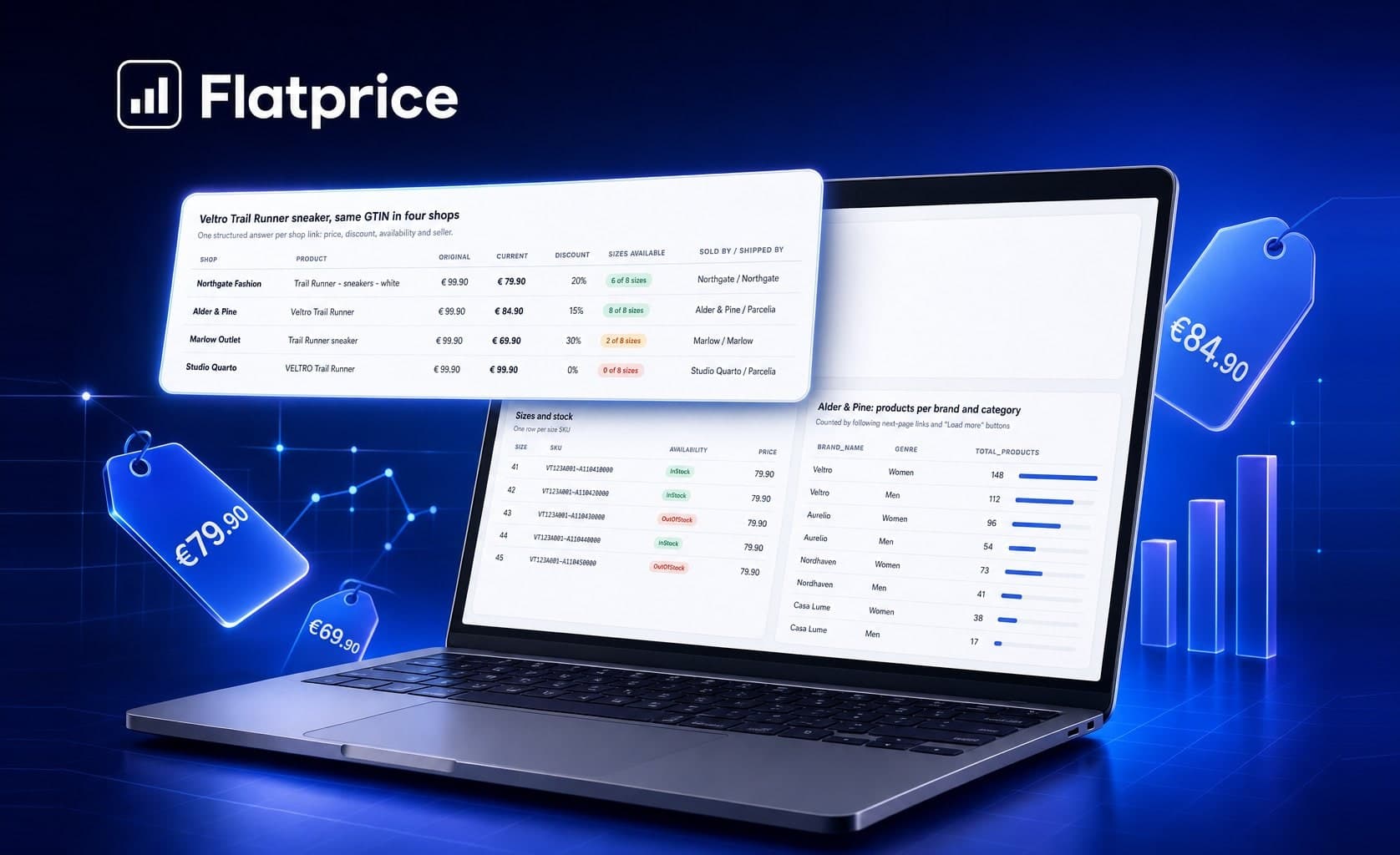
Competitor prices, discounts, product assortments, available stock and seller data across different markets, all in one integrated system for collecting and analyzing data. Flatprice was designed to help brands, retailers and distributors understand the market, follow competitors and use data to set prices and develop business strategies.
- Industry
- E-commerce, retail and wholesale
- Services
- Big data
- Business intelligence
- Market analysis and data collection automation
- Platforms
- Cloud architecture
- Data collection engine
- API
The problem to solve
In markets where prices, offers and product assortments change all the time, companies need up-to-date data to understand competitors’ moves and make the right business decisions.
Do you face these problems in your company too?
Setting prices without knowing competitors’ product prices.
Discovering competing offers and discounts after sales have already been affected.
Not knowing which products and sizes competitors have sold out of.
Planning new collections without analyzing the product assortments available on the market.
Difficulty tracking the brand’s product prices across different distributors and sellers.
Reliance on manual market studies and data that quickly loses its value.
Who is Flatprice designed for?
Online stores
Monitoring competitors’ prices, assortments and product availability to support business strategies.
Fashion brands
Tracking product prices and availability at stores and distributors across different markets.
Distributors and wholesalers
Understanding consumer selling prices and tracking products across distribution networks.
E-commerce marketplace sellers
Using market data to analyze prices, products and business opportunities.
Stores and retail chains
Analyzing prices and assortments and tracking competitors’ moves in the market.
Consulting and market research firms
Access to structured data on prices, products, brands and categories, with the option to use it through an API.
How does the system work?
Tracking competitors and markets
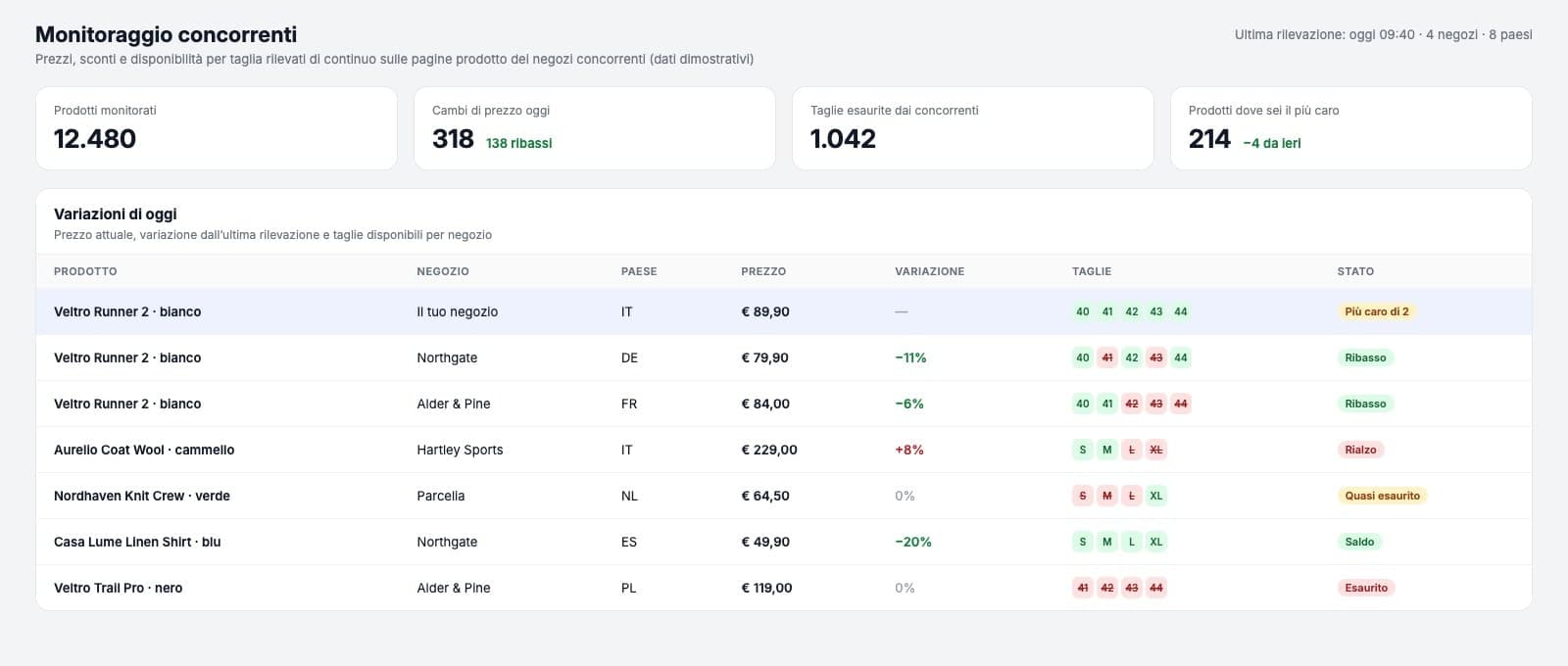
Collecting data on prices, discounts, products and sizes available at competing stores in several countries, to provide information that supports business analysis.
Product data API
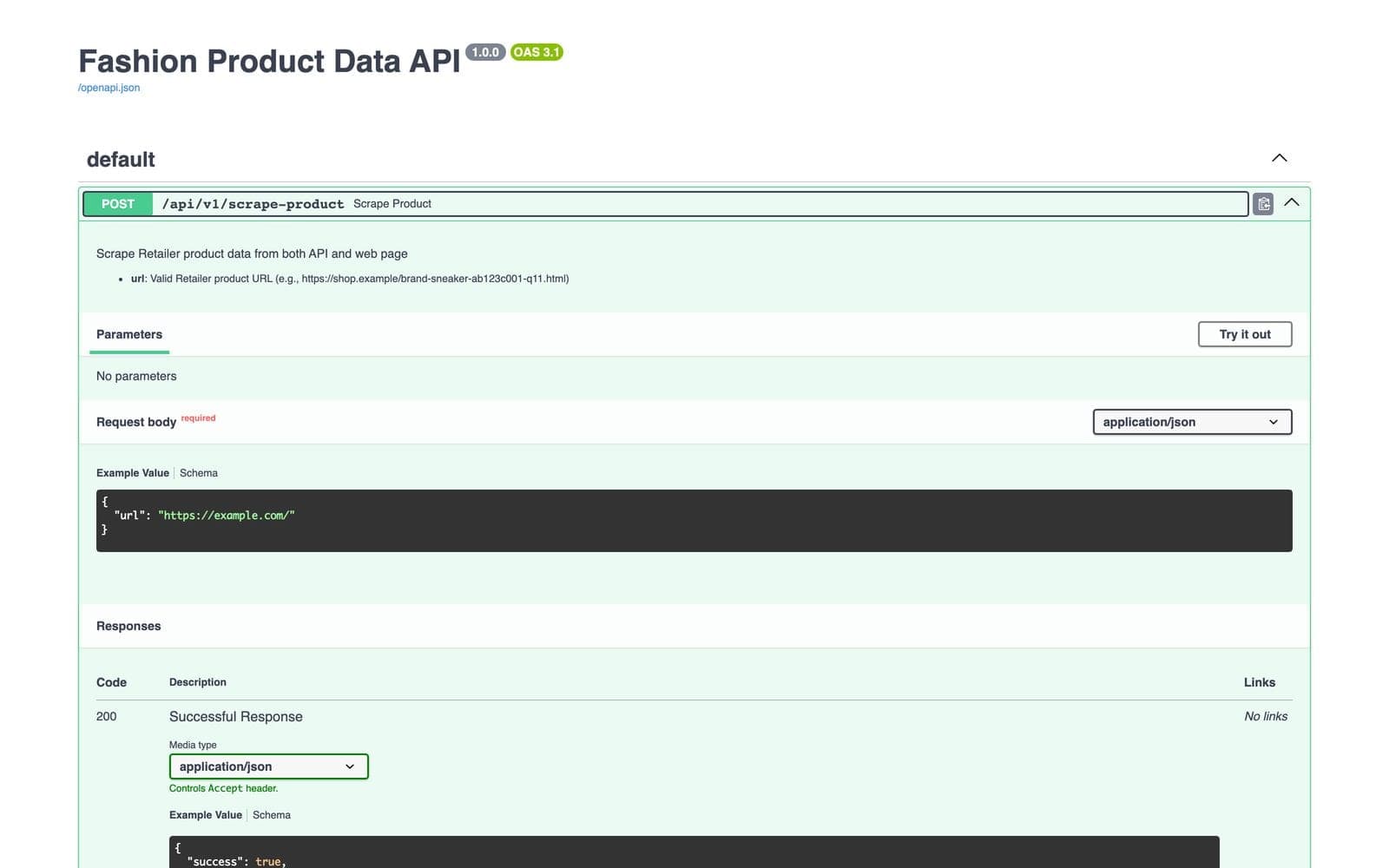
From the product link, the system extracts the name, brand, category, price, discounts, images and product codes such as SKU and GTIN, and delivers them in a unified format.
With solutions like this
+7%
Higher profit margin at stores that use AI pricing.
Merging and verifying data sources
The system combines the data the store provides with information extracted from product pages, with checks and retries when needed.
Tracking product and size availability
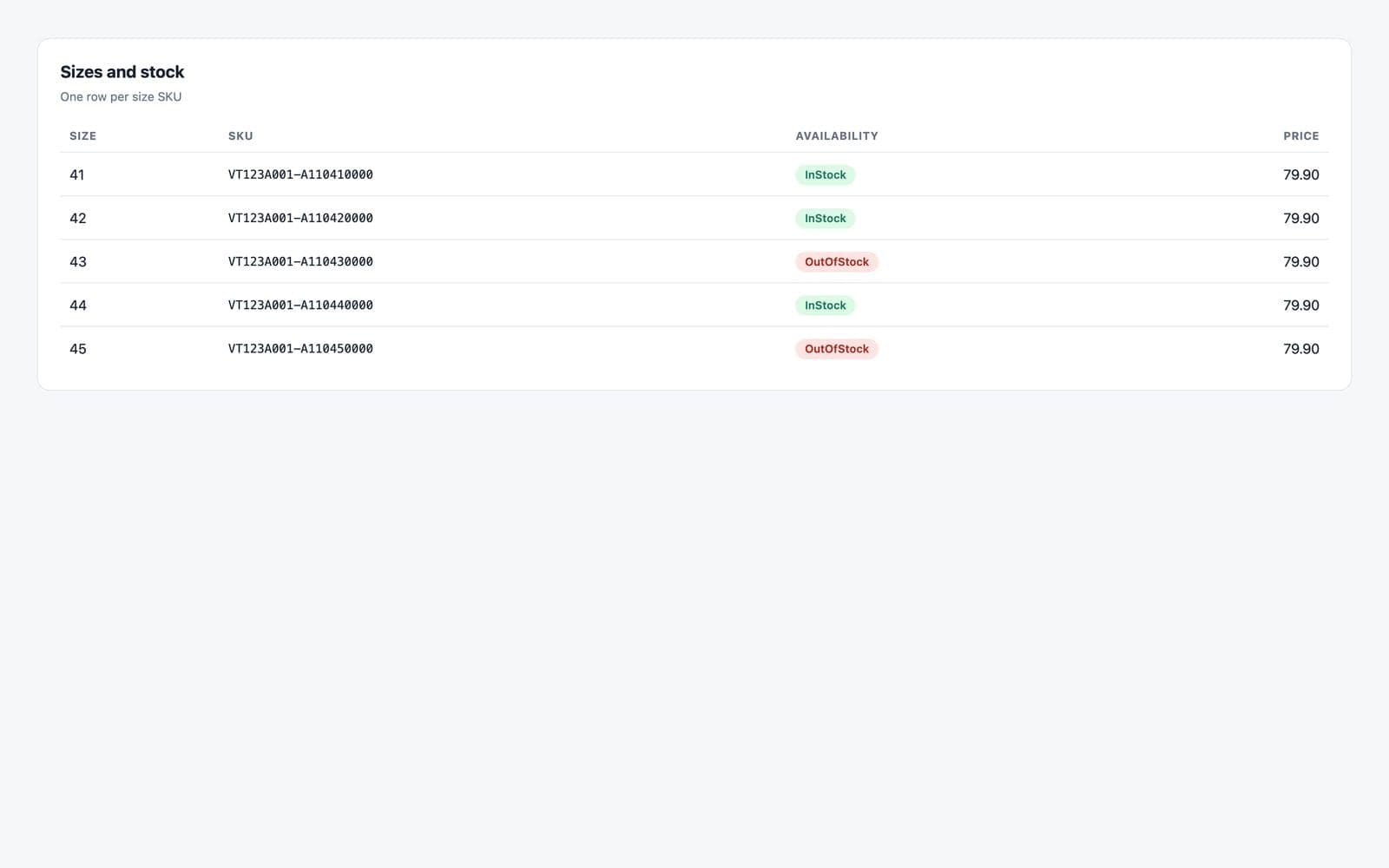
Monitoring the availability of each product and size, making it possible to study competitors’ stock levels and identify potential business opportunities.
International market analysis
Collecting data from the regional versions of stores in eight markets, making it possible to study differences in prices, assortments and product availability between countries.
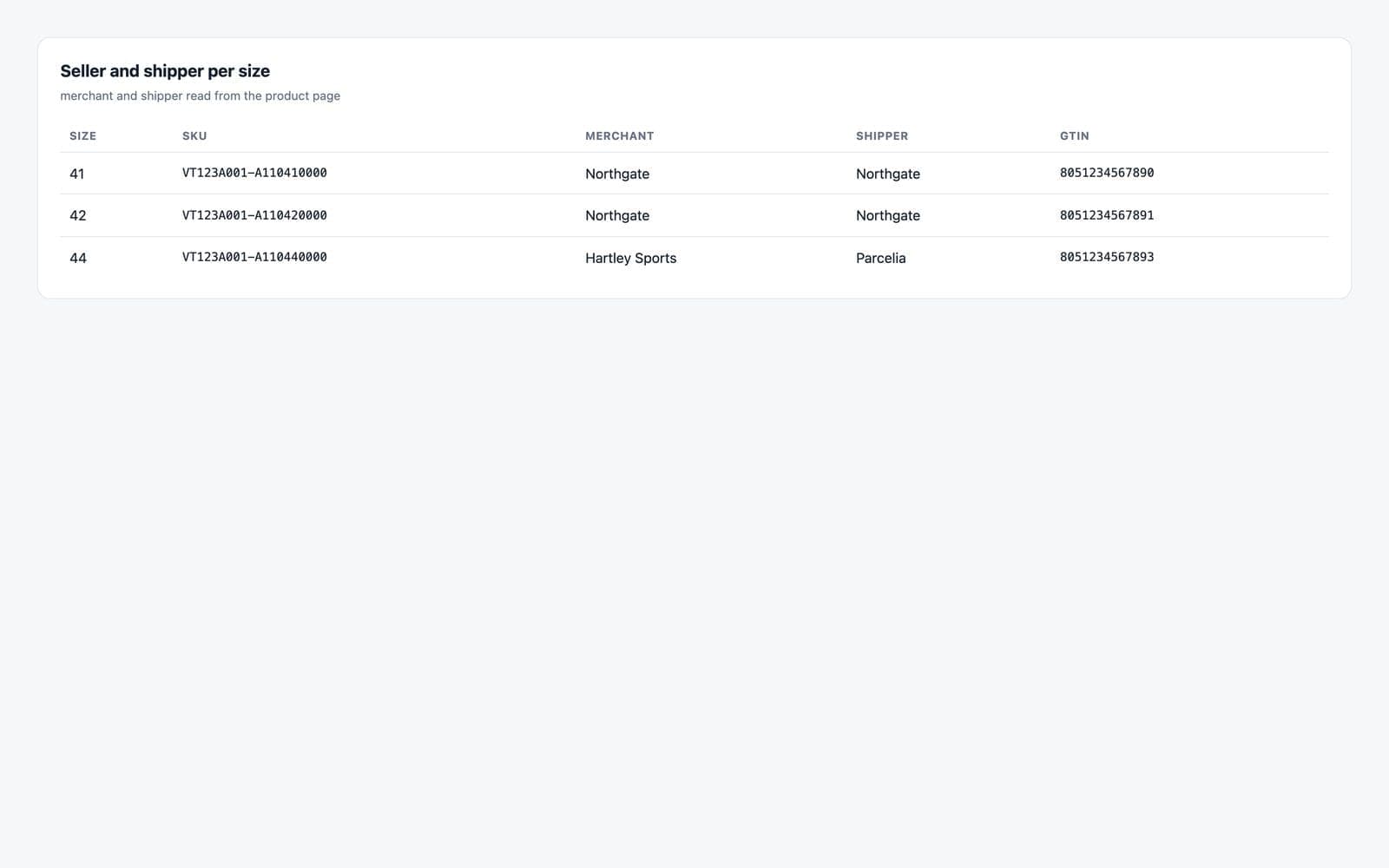
Seller and shipping data
Extracting information on the seller and the party responsible for shipping, to understand product distribution channels and how products reach the consumer.
With solutions like this
10+
hours saved by category managers.
Data collection from several stores
A scalable engine that supports multiple sources for collecting product data, with the option to add new stores and sources according to their technical setup.
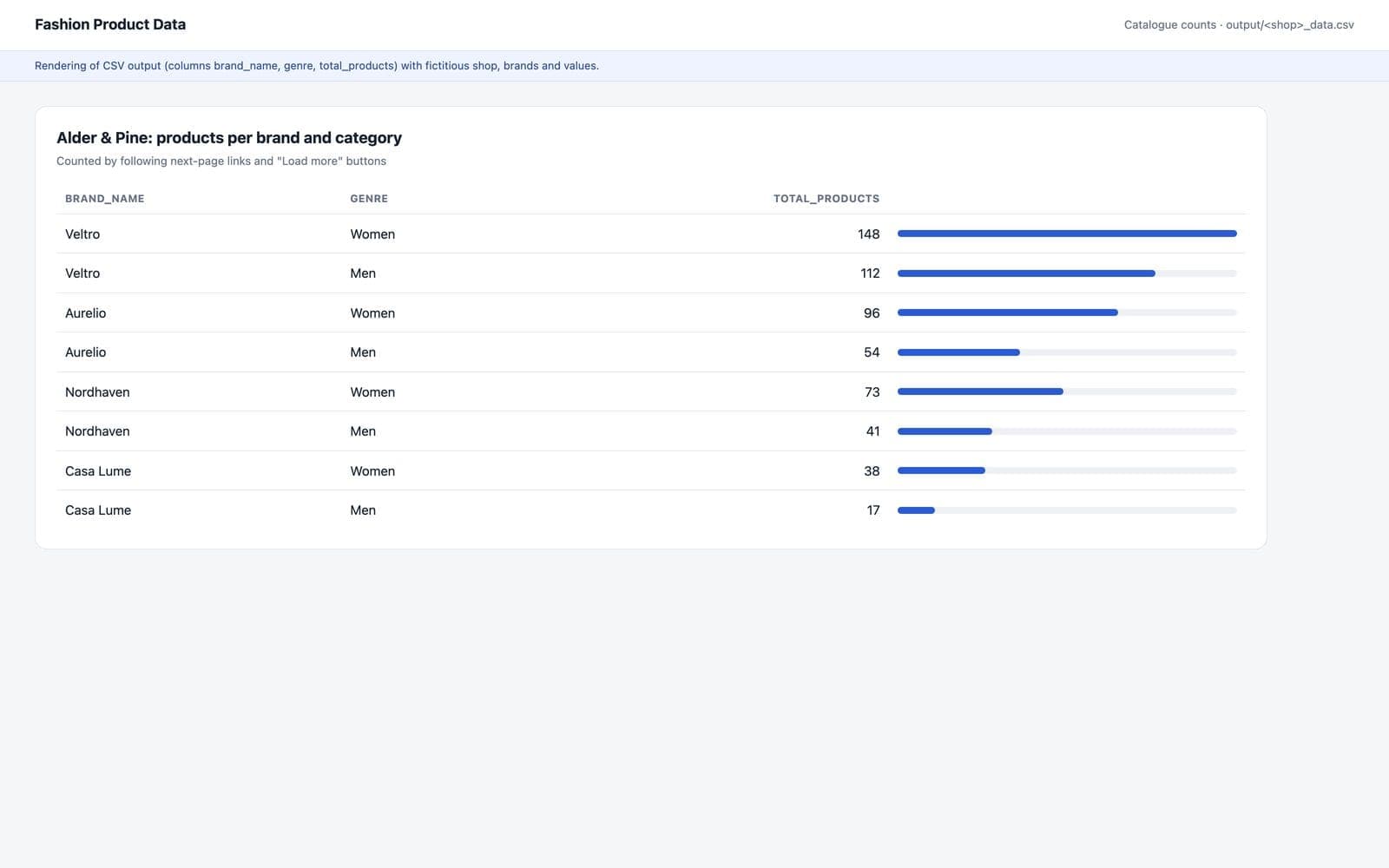
Brand and category analysis
Collecting data on product assortments and item counts by brand and category, to understand the areas competitors focus on.
Cloud architecture for data management
A technical architecture dedicated to collecting, storing and organizing data and making it available for use in applications and analytics systems.
Does your company need a similar platform for market and competitor analysis?
How did we build the solution?
Unifying market data
We designed a unified model to organize data on prices, products, sizes, availability and sellers, despite their different sources.
Automating product data collection
We developed an engine that extracts product data from a single link and turns it into structured information ready for processing and analysis.
A flexible architecture for multiple data sources
We separated each store’s settings from the data collection engine, to make it easier to add new sources and expand into new markets.
Scalable cloud architecture
We designed a technical environment that supports growing data volumes and more products, stores and target markets.
Business impact
Benchmarks from published experiences with similar solutions.
+7%
Higher profit margin at stores that use AI pricing.
10+
hours saved by category managers.
Development and expansion options
Daily market tracking
Scheduling data collection runs and keeping a history of prices, products and availability.
AI pricing strategies
Developing models that analyze competitor data and suggest prices, offers and products worth focusing on, taking profit margins and business goals into account.
Smart alerts
Sending alerts when competitors’ prices change, new offers are launched or certain products sell out.
Product matching across stores
Using global product codes and AI to recognize the same product at different stores and compare its data.
Market and price trend analysis
Studying how prices, discounts and product availability change over time, and tracking seasonal trends.
Expansion into new sectors and markets
Adding data sources in electronics, furniture, cosmetics, food and other sectors.
Frequently asked questions
What product data does Flatprice provide?
Name, brand, product codes, prices, discounts, sizes, availability status, and seller and shipping data.
Can prices of the same product be compared across several stores?
The system provides unified product data and global codes such as GTIN, and an engine to match products and run comparisons automatically can be developed.
Can new stores and data sources be added?
Yes. The data collection engine was designed to support adding new sources according to their technical structure and the data required.
Can we see which sizes competitors have sold out of?
Yes. The system tracks product availability by size and SKU, in stock or out of stock, to show which products competitors have sold out of.
Do you need to understand the market and your competitors better?
We study with you the markets, competitors, products and data you need, and develop an integrated system for collecting and analyzing data and supporting pricing and sales strategies.
Next project

Cassento